Special Teacher to Hear What a Child SVG Review
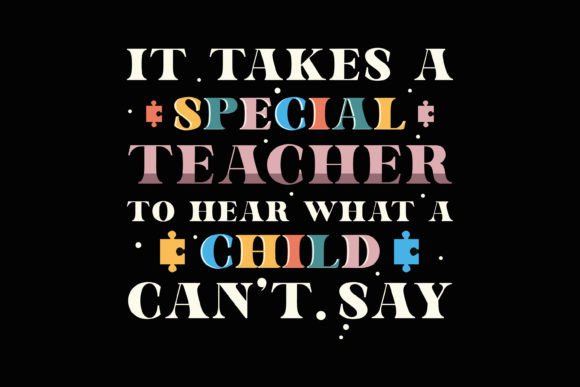
I have spent years reviewing digital assets for the embroidery community, and I know that the difference between a good design and a great finished product often comes down to one thing: context. When I first saw Special Teacher to Hear What a Child SVG, my initial reaction wasn't just about the quote itself, but about how it would translate from a vector file into actual thread on fabric. This falls squarely under the Crafts category, specifically within Graphics, but its true value lies in its application as a machine embroidery design.
The retro aesthetic of this Autism Quote SVG immediately sets a warm, nostalgic tone. It feels less like a corporate graphic and more like a heartfelt message found in a vintage classroom or a cherished family album. For a designer looking to create personalized gifts or boutique merchandise, this mood is gold. The layout suggests a central focus, likely perfect for a chest pocket placement on a tote bag or a centered motif on a sweatshirt. However, before you hit "stitch," there are practical considerations that go beyond simply downloading the file.
Real-World Application: From File to Finished Product
Let's imagine a real scenario. You are preparing for a back-to-school craft fair or fulfilling a custom order for a local school district. You need a design that conveys support and appreciation without being overly clinical. You decide to use Special Teacher to Hear What a Child SVG for a set of embroidered aprons for a special education teacher. The goal is to create something that feels handmade, professional, and deeply personal.
In this setting, the 100 color-changeable feature becomes a critical asset. Unlike static designs where you are stuck with a single thread palette, this flexibility allows you to match the thread colors to the specific uniform or fabric of the recipient. If the teacher loves pastel blues, you can shift the design elements to complement that hue. If you are making a patch for a dark navy cap, you can ensure the contrast remains high enough for visibility. This adaptability elevates the perceived value of your handmade product.
When applied to a tote bag design, the retro style pairs beautifully with canvas textures. The design acts as a focal point that draws attention to the wearer. Similarly, for sweatshirt embroidery, the softness of the cotton blend provides a forgiving surface for the stitches. However, if you plan to use this for baby embroidery on a onesie or a nursery pillow cover, you must be mindful of the scale. A design intended for a large garment might look cluttered on a small infant bib unless resized appropriately.
Navigating Technical Challenges in Embroidery
As an experienced reviewer, I cannot stress enough that every design has its limits. While Special Teacher to Hear What a Child SVG is versatile, it requires strategic placement depending on the substrate. If you are working with textured fabrics like heavy denim or terry cloth towels, the definition of fine details may soften. The design includes elements that rely on clean lines; on a rough weave, these could blur together.
Another area requiring caution is the use of thin or stretchy fabrics. For custom apparel made of lightweight jersey or silk blends, the stitch density inherent in a fill-heavy design can cause puckering. In these cases, using a proper stabilizer is non-negotiable. Without adequate backing, the tension of the threads will distort the fabric, ruining the crisp look of the retro typography. Always test the design on a scrap piece of the exact same material before committing to the final project.
Curved surfaces present their own set of hurdles. If you intend to embroider this onto a cap or a hat, remember that the curvature changes the way the eye perceives the shape. A straight line on a screen might appear curved when stitched onto a rounded crown. Small lettering, if present in the intricate parts of the design, can become illegible on tight curves. For such applications, a larger hoop size is often necessary to maintain stability, which might limit where you can place the design on the garment.
Visual Appeal and Brand Consistency
The visual impact of this design extends beyond the stitching itself. In the world of Etsy sellers and small shop products, presentation is everything. When creating a printable mockup for your online store, the ability to change colors means you can showcase the design against various backgrounds—white, black, gray, or vibrant patterns—to demonstrate its versatility to potential buyers. This transparency builds customer trust and reduces returns caused by mismatched expectations.
For commercial embroidery projects, consistency is key. Clients expect a uniform look across multiple items. Since this embroidery file comes with source files (EPS or SVG), you have the freedom to adjust the spacing and sizing to ensure brand consistency across different merchandise, from kitchen towels to pillow covers. The retro theme adds a layer of emotional connection, making the item feel like a thoughtful gift rather than mass-produced merchandise. This emotional resonance is what drives engagement and repeat business.
Essential Designer Notes for Success
Before you start your next embroidery project, here are some practical steps to ensure your final result matches the quality of the original design:
- Test First: Always run a test stitch on scrap fabric. Check the stitch density to see if the design holds up or if it needs digitizing adjustments.
- Thread Contrast: Review the thread colors against your fabric. High contrast ensures readability, especially for text-based designs.
- Hoop Size Matters: Confirm that your hoop size accommodates the design dimensions without cutting off edges. A design that fits perfectly in a digital preview might be too large for a standard 4x4 hoop.
- Inspect Details: Zoom in on the vector file to inspect small details. Ensure that corners and curves are smooth and ready for conversion to stitches.
- Licensing Check: Verify the licensing terms before selling finished items or distributing the digital product. Not all design assets allow for commercial use.
- Stabilizer Selection: Use the correct type of stabilizer for your fabric weight. Heavy-duty stabilizers are often needed for dense designs to prevent shifting.
Ultimately, Special Teacher to Hear What a Child SVG is a strong contender for any designer looking to add a meaningful touch to their collection. Whether you are creating a holiday gift, a wedding gift, or a piece of boutique branding, the retro autism quote offers a unique narrative that resonates with audiences. By paying attention to the technical nuances of fabric texture, stitch density, and placement, you can transform this digital graphic into a stunning physical reality.
Remember, the best embroidery design is one that not only looks good on a screen but performs flawlessly under the needle. Take the time to evaluate the design against your specific needs, experiment with different applique design techniques if necessary, and trust your instincts as a maker. With the right preparation, this SVG can be the centerpiece of your next successful craft business venture.